- wisetech
Uncategorized
Share on:-

Share on:-
Patients trust healthcare providers with some of their most sensitive personal information. That trust should extend to your website as well.
Whether patients are booking appointments, completing contact forms, or simply reading about your services, your website plays an important role in protecting their privacy and creating confidence in your practice.
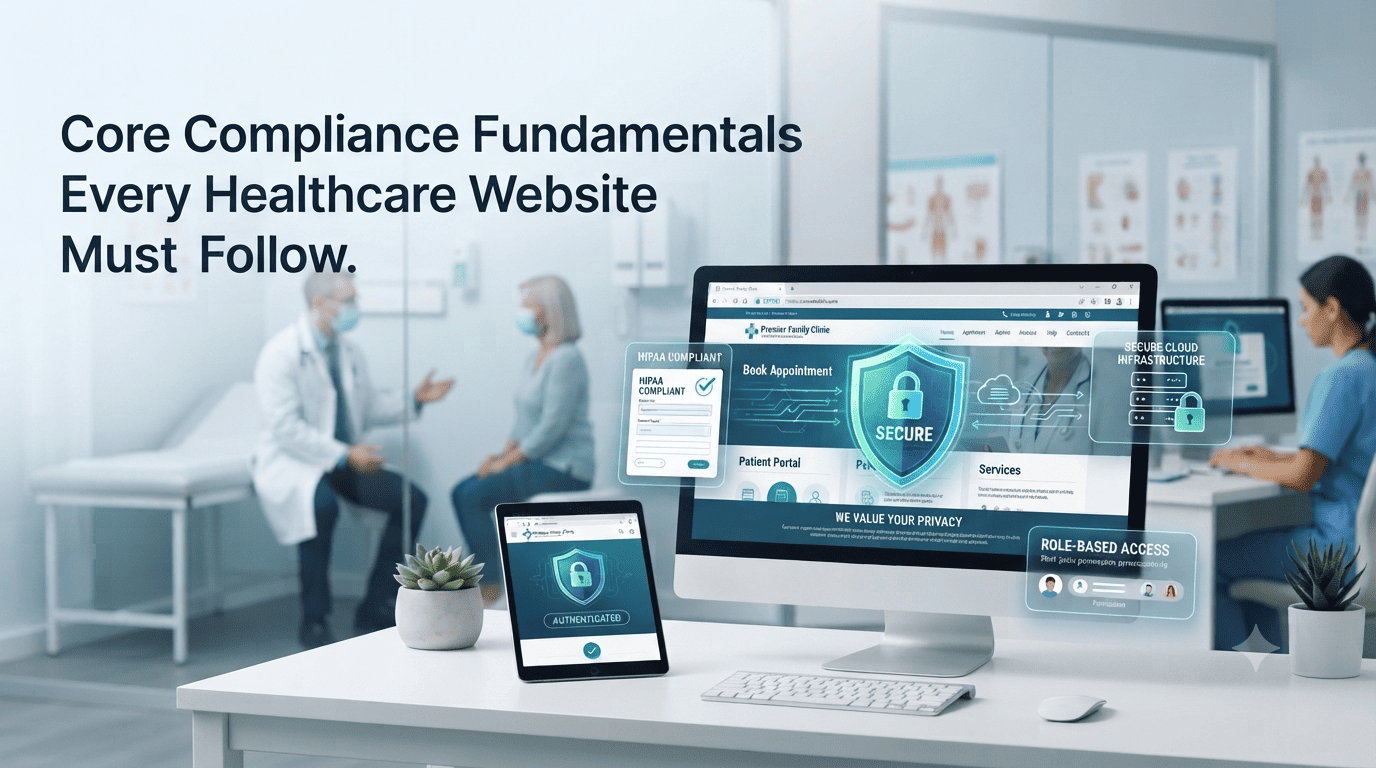
While specific legal obligations vary depending on your country, region, and the services you provide, every healthcare organization should understand the core compliance fundamentals healthcare website owners should prioritize. Building these foundations helps improve security, strengthen patient trust, and support compliance with regulations such as HIPAA, GDPR, or other applicable privacy laws.
Healthcare websites often process sensitive information.
Without appropriate safeguards, organizations may face:
Compliance is not only about meeting legal requirements—it is also about demonstrating professionalism and protecting every patient interaction.
Every healthcare website should use SSL/TLS encryption.
HTTPS protects information exchanged between visitors and your website, helping reduce the risk of unauthorized access.
Patients expect to see a secure connection before sharing any personal information.
Patients should understand:
Privacy policies should be written in clear, understandable language and reviewed regularly.
Avoid requesting unnecessary personal information.
Limit data collection to what is genuinely required for:
Collecting less information reduces unnecessary risk.
Healthcare organizations should implement appropriate technical and organizational safeguards, including:
These practices help reduce cybersecurity risks.
Visitors should clearly understand when:
Providing transparent choices helps build trust while supporting applicable privacy requirements.
Every patient contact form should:
Forms are often the first point where sensitive information enters your systems.
Outdated software increases security risks.
Regularly update:
Timely updates help address known vulnerabilities.
Many healthcare websites rely on external services for:
Evaluate whether these providers meet your organization’s privacy and security expectations before integrating them.
Technology alone cannot ensure compliance.
Everyone responsible for managing your website should understand:
Well-trained teams help reduce human error.
Healthcare regulations and technology continue to evolve.
Schedule periodic reviews to evaluate:
Continuous improvement helps your website remain secure and trustworthy.
Building a compliant healthcare website is not about adding unnecessary complexity.
It is about establishing reliable processes that protect patient information, strengthen trust, and support your organization’s long-term digital strategy.
Because regulatory requirements differ by jurisdiction, healthcare organizations should seek qualified legal or compliance advice to determine which laws and standards apply to their specific circumstances.
By focusing on these core compliance fundamentals, you create a stronger, safer digital experience for every visitor.
For more Healthcare Technology blogs click here.
At WiseTech Informatics, we are always open for business. If you are looking for a reliable web development company, we are always available. You can reach us via any of our contact channels today to book an appointment.