- wisetech
Uncategorized
Share on:-
Share on:-
Many healthcare providers struggle with ongoing compliance challenges. However, the real issue is not the regulations themselves—it is the lack of systems designed to handle them. When compliance is built into healthcare systems, therefore, clinics can reduce risk, simplify operations, and eliminate constant uncertainty. In other words, structured systems transform compliance from a burden into a built-in advantage.
In many clinics, compliance is treated as an additional task rather than an integrated process. As a result, teams rely on manual data handling and disconnected tools.
Consequently, this leads to:
• Limited visibility into patient data
• Increased risk of errors
• Time-consuming administrative work
Ultimately, teams spend more time managing compliance than focusing on patient care.
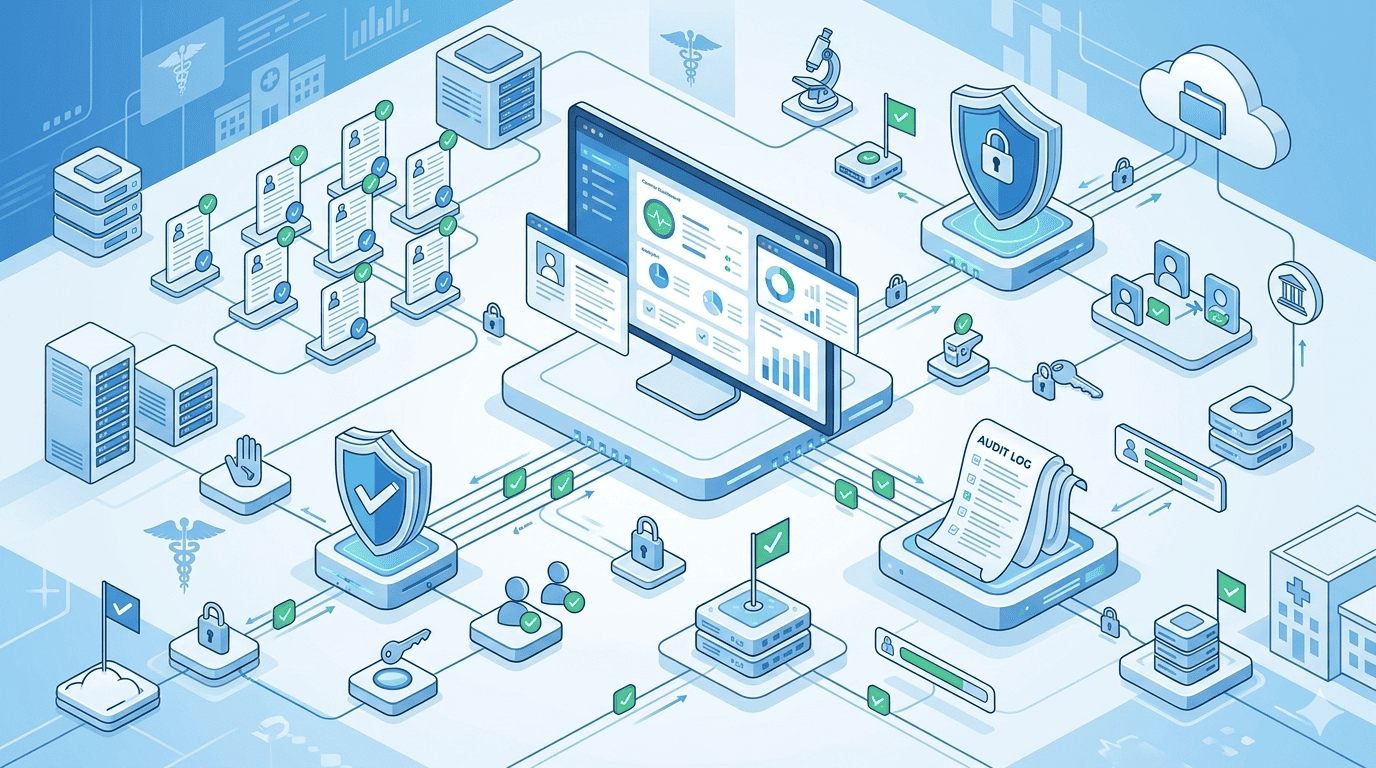
When compliance is embedded into systems, it becomes part of everyday operations rather than a separate responsibility. For example, secure data storage, controlled access, and automated tracking are built into workflows.
Moreover, such systems naturally align with frameworks like
Health Insurance Portability and Accountability Act and
General Data Protection Regulation.
As a result, compliance becomes consistent and easier to maintain.
A unified system ensures that patient information is stored securely and accessed efficiently. Additionally, it reduces duplication and improves coordination across teams.
Only authorized personnel should access specific data. Therefore, clinics can minimize risk and improve accountability.
Tracking system activity helps monitor access. In turn, this improves transparency and supports compliance reporting.
Patient communication should be encrypted. Furthermore, secure channels reduce the risk of data breaches.
Consistency ensures compliance across operations. At the same time, it improves efficiency and reduces confusion.
To move toward compliance built into healthcare systems, clinics should follow a structured approach.
First, identify gaps in data handling, access control, and workflows.
Next, replace disconnected tools with integrated platforms.
Then, adopt systems designed with compliance in mind.
Meanwhile, ensure staff understand both system usage and compliance responsibilities.
Finally, conduct regular audits and updates to maintain compliance over time.
Clinics that adopt this approach experience multiple advantages. For instance:
✔ Reduced compliance stress
✔ Lower risk of data breaches
✔ Improved operational efficiency
In addition, they gain greater patient trust and scalability.
At WiseTech Informatics, we help healthcare providers build digital systems that integrate compliance into daily operations.
Compliance should not feel like a constant burden. Instead, it should function as a natural part of operations.
When systems are designed correctly, therefore, compliance becomes automatic, consistent, and manageable. Ultimately, healthcare providers that invest in compliance-ready systems position themselves for long-term success.
At WiseTech Informatics, we are always open for business. If you are looking for a reliable web development company, we are always available. You can reach us via any of our contact channels today to book an appointment.